
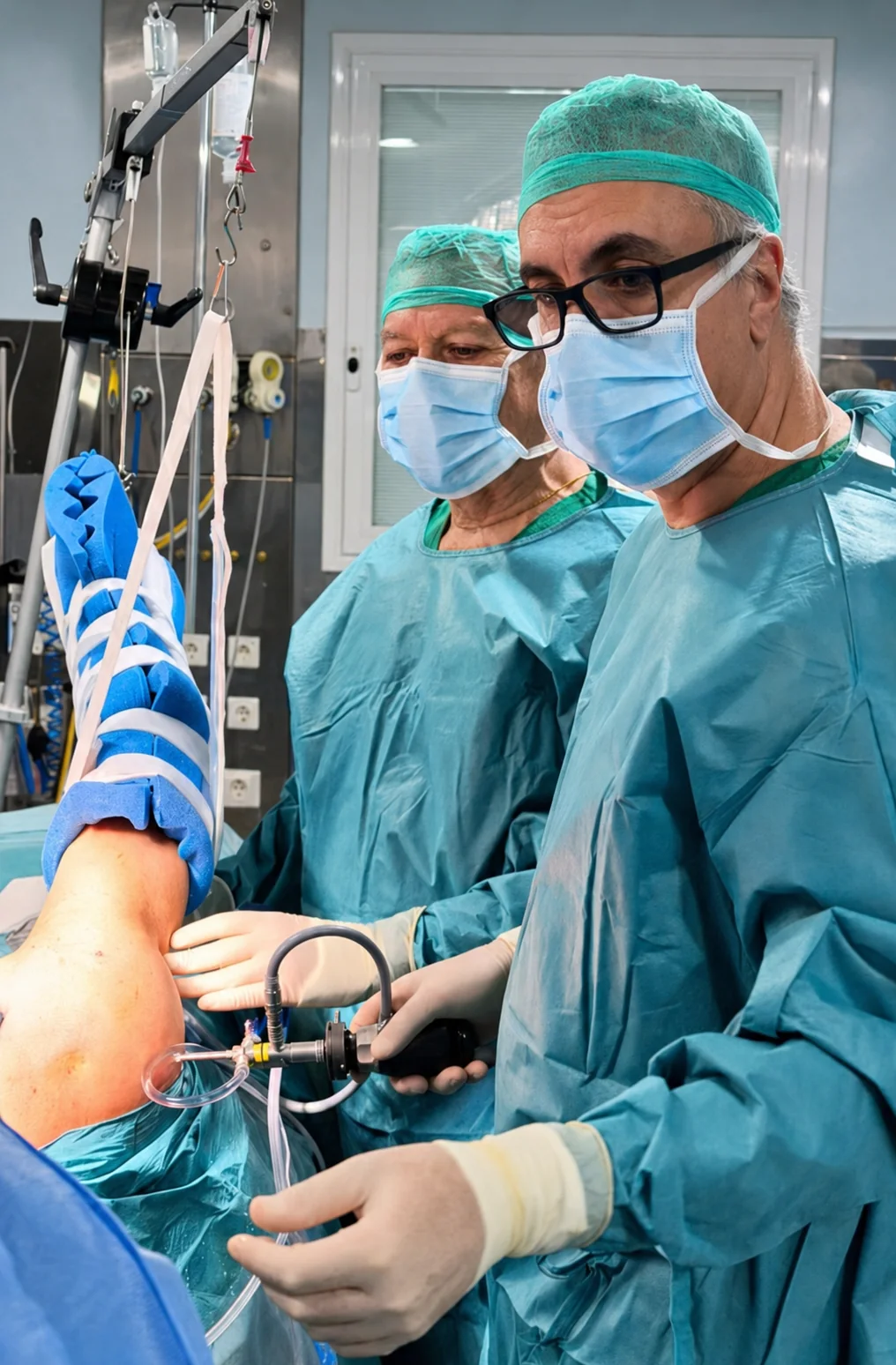
Conditions that may be treated
- Rotator cuff tears.
- Instability and recurrent dislocations.
- Labral injuries.
- Conditions affecting the long head of the biceps.
- Subacromial pain syndrome in selected cases.
- Synovitis, loose bodies and other confirmed injuries.
The decision to operate
Not every tear or painful shoulder requires surgery. Biological age, functional demands, injury type and size, loss of strength, progression and response to non-surgical treatment are assessed.
After the procedure
Immobilisation, the start of movement and loading depend on whether debridement, stabilisation or tendon repair has been performed. Biological healing takes time; accelerating recovery without appropriate criteria may compromise it.
What is assessed before surgery
Pain, loss of strength and a feeling that the shoulder is slipping out of place require different assessments. Examination and imaging help distinguish rotator cuff, labral and stability problems. The response to non-surgical treatment is also reviewed.
Recovery tailored to the procedure
A tendon or labral repair needs protection while it heals. Sling use, mobility and strengthening are prescribed according to the procedure. A small incision does not mean the repaired tissue allows an immediate return to work or sport.
What risks should be discussed?
Before making a decision, alternatives and risks such as infection, stiffness, nerve injury or persistent symptoms are explained. Recovery depends on the diagnosis and the repair performed; there is no single recovery timeline for every shoulder.
Sources and further reading
AAOS: shoulder arthroscopy
Sources consulted on 19 October 2026. General information; treatment indications are determined during the consultation.