
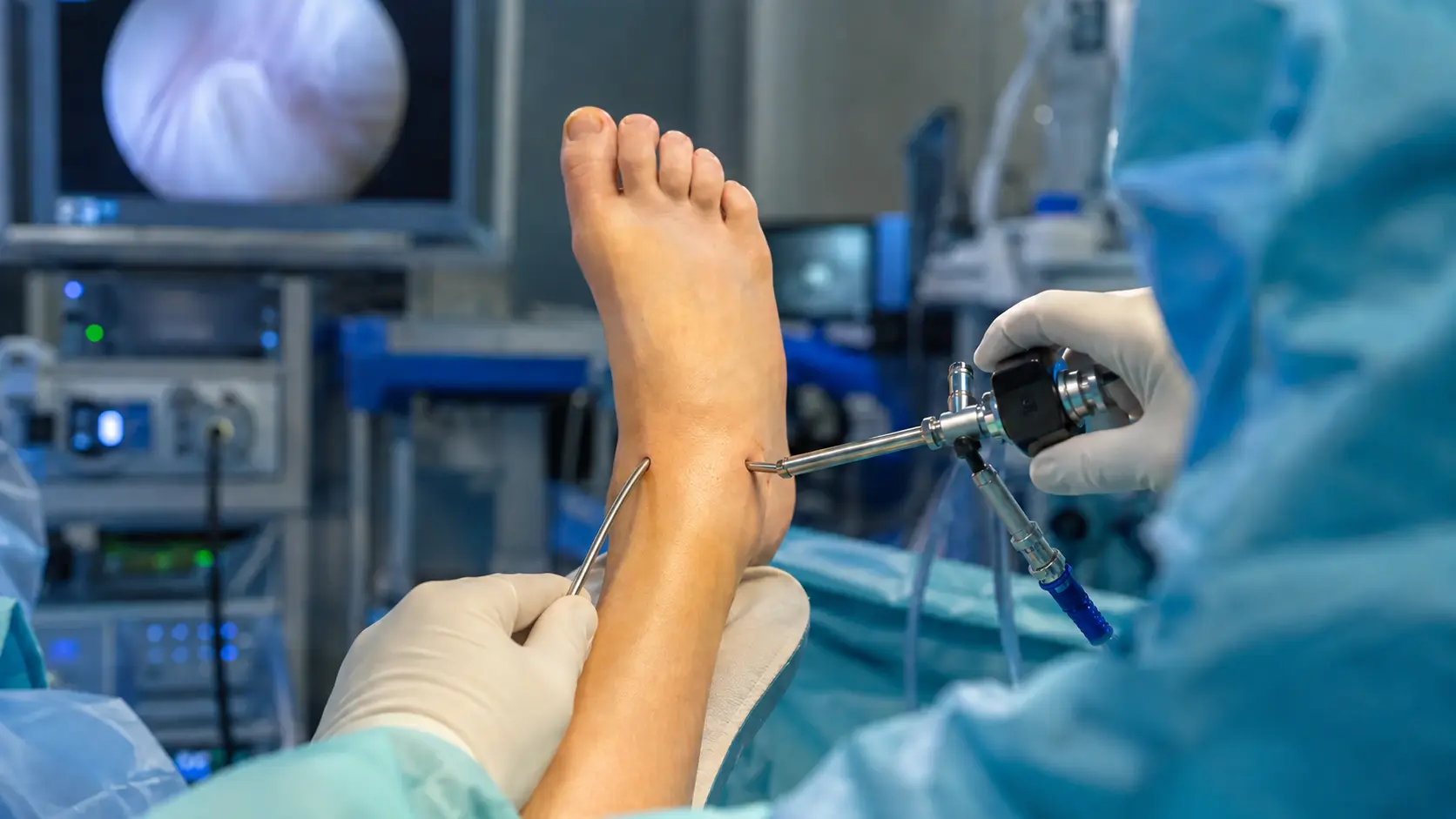
Conditions that may be assessed
- Osteochondral lesions of the talus.
- Anterior or posterior impingement.
- Loose bodies.
- Synovitis.
- Instability associated with intra-articular conditions.
- Lasting effects of sprains and selected sports injuries.
Functional goal
The indication aims to address the mechanical cause or treat the injured tissue, not simply the pain. Clinical assessment and imaging help determine whether arthroscopy may offer a reasonable benefit.
Individualised recovery
Weight-bearing and a return to running or jumping depend on the procedure performed. An osteochondral lesion may require more protection than treatment for impingement.
Pain, impingement or instability
Locking, persistent pain and repeated sprains can have different causes. Assessment helps determine whether there is an intra-articular problem and whether arthroscopy is appropriate, alone or alongside another procedure.
Weight-bearing and protection after surgery
Weight-bearing may be allowed early after some procedures and restricted for longer after others. Mobility, physiotherapy and ankle protection must be tailored to the procedure, especially when cartilage is treated.
Driving, work and sport
Returning to driving requires being able to control the vehicle safely and following instructions on weight-bearing and medication. Work and sporting activities should be assessed according to their demands. Risks of infection, bleeding or nerve injury are also discussed.
Sources and further reading
AOFAS / FootCareMD: ankle arthroscopy
Sources consulted on 19 October 2026. General information; treatment indications are determined during the consultation.